Resources
For BDS Guidelines, please click the below button.

Featured
Energy Companies & Israel: Complicity, Responsibility and Accountability A BDS International Law Based Policy
This document outlines the international legal framework that informs the BDS campaign strategy in this respect. It reflects the general rules and principles of international law applied to the situation in the occupied Palestinian territory, in particular in light of the recent decisions by the International Court of Justice, the International Criminal Court, and various United Nations bodies.
Featured
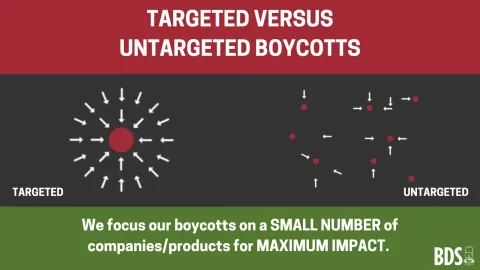
BDS Guide to Strategic Campaigning for Palestinian Rights
As Israel’s decades-old regime of settler-colonialism and apartheid continues to escalate its ongoing genocide and ethnic cleansing, a new wave of solidarity with the Palestinian people is spreading globally. Many people are learning for the first time about the historic 2005 Palestinian civil society call to boycott, divest from, and sanction (BDS) Israel until it complies with international law. In this guide, we lay out the movement’s basics, best practices, and some helpful tips and ideas for strategic BDS campaigning.
Adopting an Ethical Procurement Policy
This document presents a policy guide for municipalities/city councils, state and federal legislators, and governments to adopt an ethical procurement policy (EPP) that is in compliance with international law. Its overall objective is to guide public policy makers to promote and ensure consistent respect for international law, and in some cases avoid complicity in violations undertaken directly or indirectly by companies.

Palantir Toolkit
Palantir Global Week of Action Toolkit

Palantir's complicity in human rights violations (intersectional fact sheet)
Palantir specifically sells technologies that are customized for Israel’s regime of occupation, apartheid and genocide against Palestinians, and it then exports it globally as “field-tested” to enable human rights violations worldwide.

BDS Toolkit for Trade Union Organizers in North America
Boycott, Divestment, Sanctions (BDS) is a Palestinian-led movement for freedom, justice and equality. The nonviolent, anti-racist BDS movement upholds the simple principle that Palestinians are entitled to the same rights as the rest of humanity. BDS campaigns are driven by the moral imperative to do no harm, and to ensure the companies, institutions, and governments we work for or can influence are not contributing to the denial of the fundamental rights of the Palestinian people.
Legal Briefing: Corporate liability of energy corporations in relation to Israel’s violations of international law
Any aid or assistance or other forms of involvement (including profiting) by energy companies in Israel’s continuing international crimes is illegal and constitutes complicity.
Operational Guide for an Ethical Procurement Policy (EPP)
This document presents an operational guide for European public bodies, including municipalities and city councils that decide to adopt an ethical and international law-compliant public procurement procedure.

How to implement obligations under the Law of the Sea to prevent illegal maritime transfers to Israel?
Legal and operational documentation top stop Maritime Transport of Military Materiel and Dual-Use Components Used For Genocide, Apartheid and Other Atrocity Crimes.

Urgent action needed ahead of the Arms Trade Treaty Conference.
Pressure State representatives to fulfil their legal and moral obligations as explicitly detailed in the Treaty.